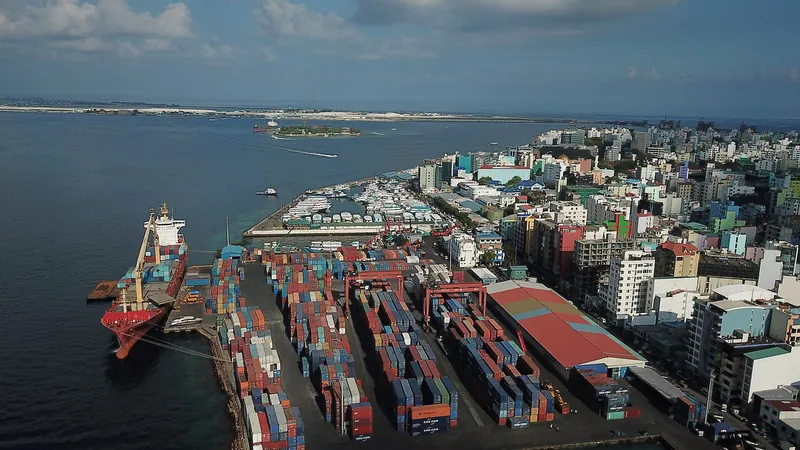
Maldives port cargo clearances fall for a fourth week as container traffic stays above trend
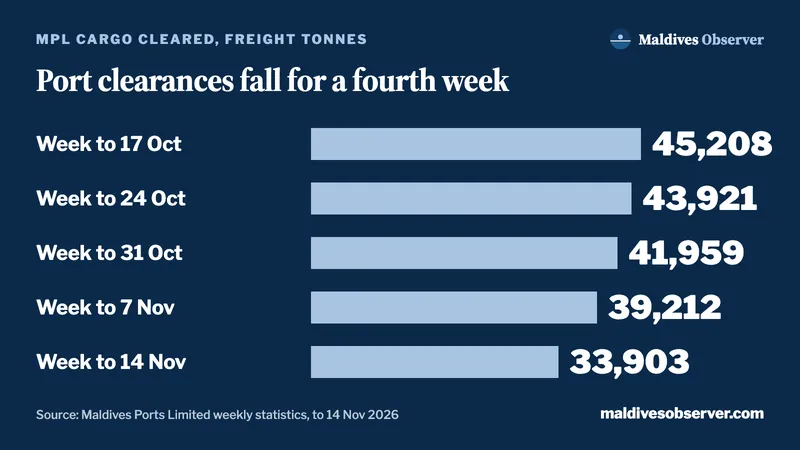
Importers cleared 33,903 freight tonnes through Maldives Ports Limited in the week to 14 November 2026, down 13.5% on the week and 25% below mid-October. Container throughput in November is still running 15% above the June–October average.
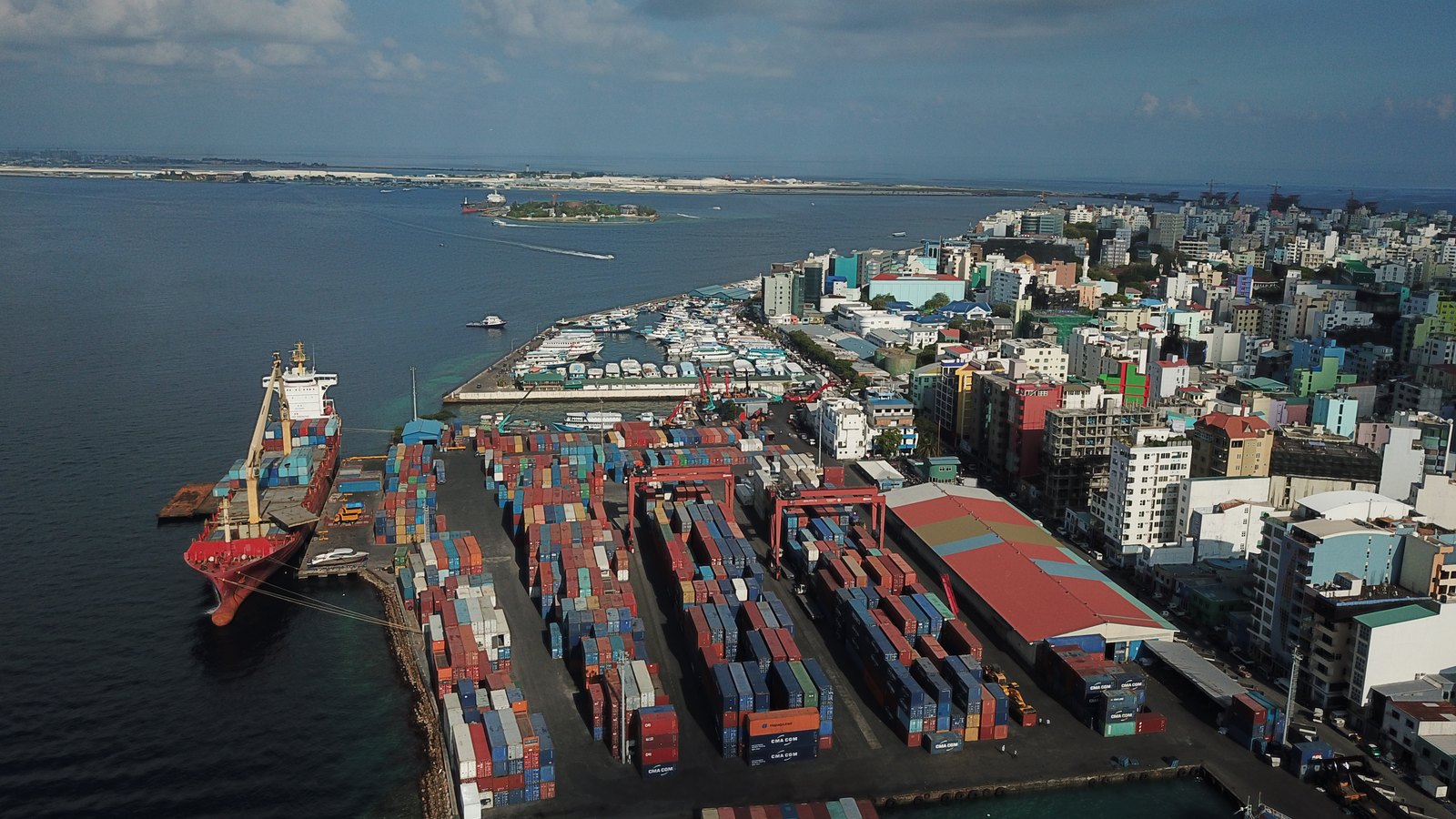
Cargo cleared through Maldives Ports Limited (MPL) fell for a fourth week in a row in mid-November. Importers cleared 33,903 freight tonnes between 8 and 14 November 2026, MPL's latest weekly release shows. That is 13.5 per cent less than the week before and 25 per cent below the 45,208 tonnes cleared in the week to 17 October. It is the lowest weekly total since the week to 29 August.
Container traffic also eased after a busy start to the month. MPL handled 3,186 twenty-foot equivalent units (TEUs) in the week to 14 November, down 24.3 per cent from 4,207 TEUs a week earlier. Across the first two weeks of November, though, container throughput was still well above the average since June.
MPL's figures for the week of 15 to 21 November had not been published when this report was written on 22 November 2026. The figures below run to 14 November.
The latest week in numbers
| MPL weekly figure | 1–7 Nov 2026 | 8–14 Nov 2026 | Change |
|---|---|---|---|
| Cargo cleared (freight tonnes) | 39,212 | 33,903 | −13.5% |
| of which from container vessels | 36,340 | 31,294 | −13.9% |
| of which from general cargo vessels | 2,872 | 2,610 | −9.1% |
| Consignments cleared | 1,362 | 1,633 | +19.9% |
| Container throughput (TEUs) | 4,207 | 3,186 | −24.3% |
| Containers unloaded (TEUs) | 2,158 | 1,354 | −37.3% |
| Containers loaded (TEUs) | 2,049 | 1,832 | −10.6% |
| Perishable cargo cleared (packages) | 48,942 | 54,921 | +12.2% |
| Vessels arrived | 13 | 9 | −4 |
Source: Maldives Ports Limited weekly statistics. Changes are our calculation.
Fewer ships came in. Nine vessels arrived in the week to 14 November, three container ships and six general cargo vessels, against 13 the week before. Six vessels departed.
The number of consignments rose even as tonnage fell, which points to smaller shipments on average. Food imports held up: perishable cargo rose 12.2 per cent to 54,921 packages, led by eggs (14,514 packages), onions (10,318) and watermelon (7,715).
November so far
Taken together, the two November weeks show cargo clearances running below the recent trend, while container handling ran above it.
- Cargo cleared: 73,115 freight tonnes in the two weeks to 14 November, an average of 36,558 tonnes a week. That is 7.2 per cent below the average of the 21 weekly releases from June to October.
- Container throughput: 7,393 TEUs in the same two weeks, an average of 3,697 TEUs a week, 15.2 per cent above the June-to-October average.
Containers are taken off ships first and cleared by importers later. In the week to 7 November MPL unloaded 2,158 TEUs, its highest weekly figure since June. Clearances in the following week did not rise to match. MPL has not commented on the gap.
Against last year
MPL's weekly series on our tracker begins in June 2026, so there is no weekly figure for the same weeks of 2025. The closest like-for-like comparison comes from MPL's quarterly reports, which count total container and general cargo throughput.
| Period | Containers (TEUs) | General cargo (freight tonnes) |
|---|---|---|
| Q1 2026 | 32,862 (−6.0% on Q1 2025) | 48,133 (+23.6%) |
| Q2 2026 | 39,332 (+16.9% on Q2 2025) | 37,283 (+5.9%) |
| First half 2026 | 72,194 (+5.2%) | 85,416 (+15.2%) |
| First half 2025 | 68,604 | 74,139 |
Source: MPL quarterly reports for Q1 and Q2 of 2025 and 2026. Half-year totals and changes are our calculation.
MPL has not yet published its quarterly report for July to September 2026. Its separate count of inbound containers in that quarter, a record, is covered in our earlier report on the third-quarter container high.
What MPL says is driving demand
In its second-quarter report, MPL said the rise in container volumes followed congestion problems in the first quarter. It credited stronger import demand, better cargo handling and more vessel calls. It linked the year-on-year rise in general cargo to "ongoing economic and infrastructure activities". The first quarter's high general cargo figure, it said, reflected demand for food, essential goods and project cargo.
The same report noted higher fuel prices and freight rates linked to the Middle East conflict, which it said were pushing up prices in an import-dependent economy.
MPL's weekly releases do not give reasons for week-to-week changes.
Malé, Hulhumalé and Thilafushi
MPL's weekly and quarterly figures are published as company totals. They do not split cargo between Malé Commercial Harbour, Hulhumalé International Terminal and the new cargo terminal at K. Thilafushi, so a port-by-port picture is not possible from the published data.
The move to K. Thilafushi has begun. On 27 October 2026 MPL started clearing full container loads by sea at Thilafushi Cargo Terminal, using a 100-metre quay wall there. It said the shift should ease pressure on Hulhumalé Terminal, which had handled most sea-cleared direct-delivery containers. Foodstuffs and medicines are still cleared through Malé and Hulhumalé. MPL has not said whether the change affects its weekly clearance count.
At the site on 1 October, the government set out its aim of starting commercial port operations at K. Thilafushi by November 2027. The 60-hectare port is planned to handle 390,000 TEUs a year at first, rising to 1.8 million TEUs when fully built, with a 375-metre international quay wall 14.6 metres deep. MPL said on 27 October that this quay wall is due for completion by July 2027, and that reclamation has started for an 820-metre domestic quay wall.
What happens next
MPL's figures for 15 to 21 November are due in the coming days and will show whether the fall in clearances has continued. Its third-quarter report should give the first full year-on-year comparison for July to September. MPL has also said Thilafushi will take on less-than-container-load clearance in future.
All weekly figures are on our port cargo tracker. Transshipment of sea freight onward by air is tracked separately on our sea-to-air cargo tracker.
Related data
All data trackersExplainers
- Income tax in the Maldives: rates, brackets, who files and tax clearance
- Maldives population: how many people live in the Maldives?
- Maldives tourist arrivals by year and by country