World Court finds Myanmar committed genocide against the Rohingya in case the Maldives joined
The International Court of Justice ruled 9–6 on 19 November 2026 that Myanmar committed genocide in Rakhine in 2017 and ordered reparation. The Maldives was one of 11 intervening States, and President Muizzu welcomed the ruling.
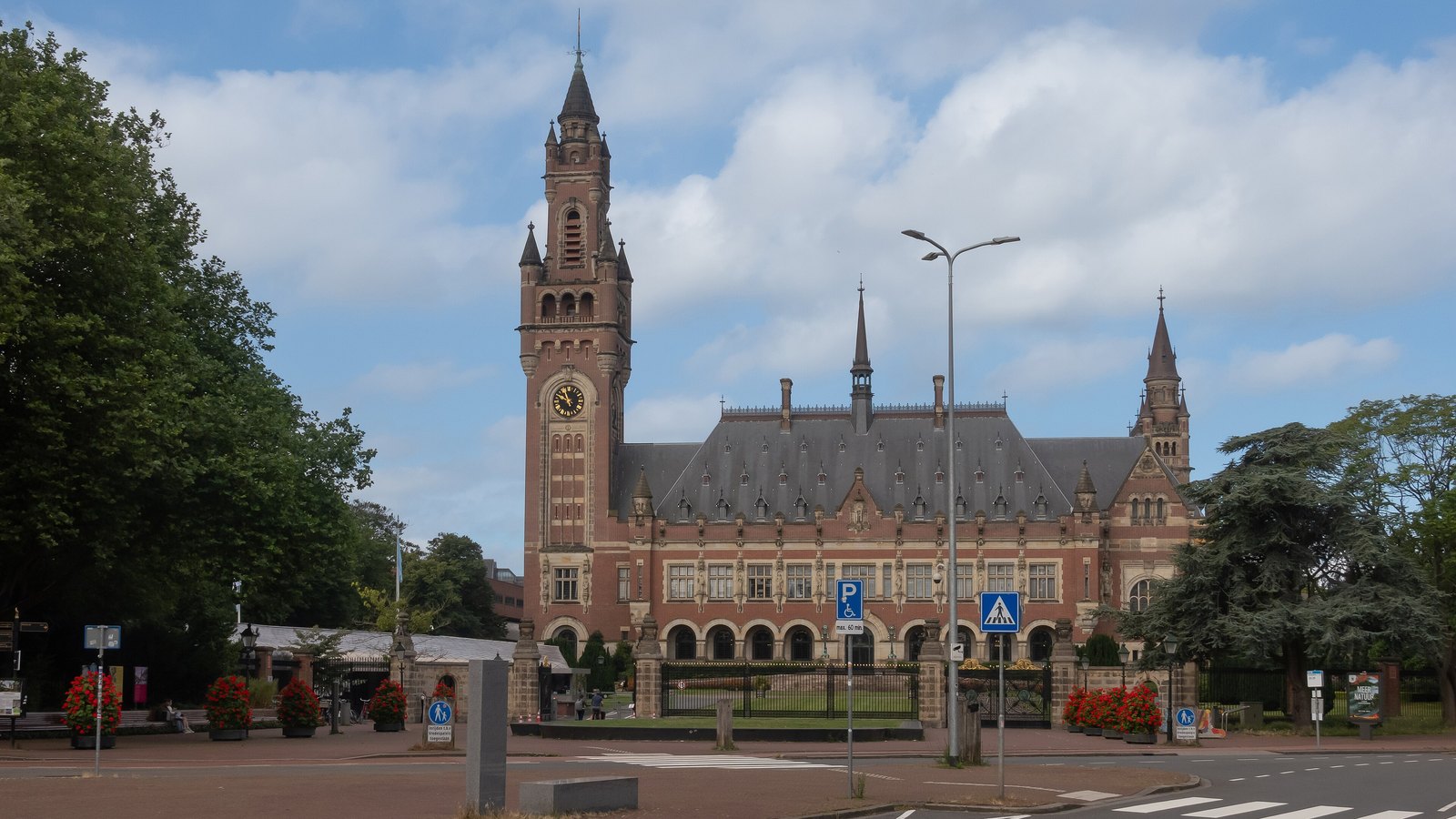
The International Court of Justice ruled on 19 November 2026 that Myanmar committed genocide against the Rohingya, in a case in which the Maldives was one of 11 intervening States. By nine votes to six, the Court found that Myanmar's security forces carried out acts of genocide in northern Rakhine State during the 2017 "clearance operations". It ordered Myanmar to make reparation and to report back within two years.
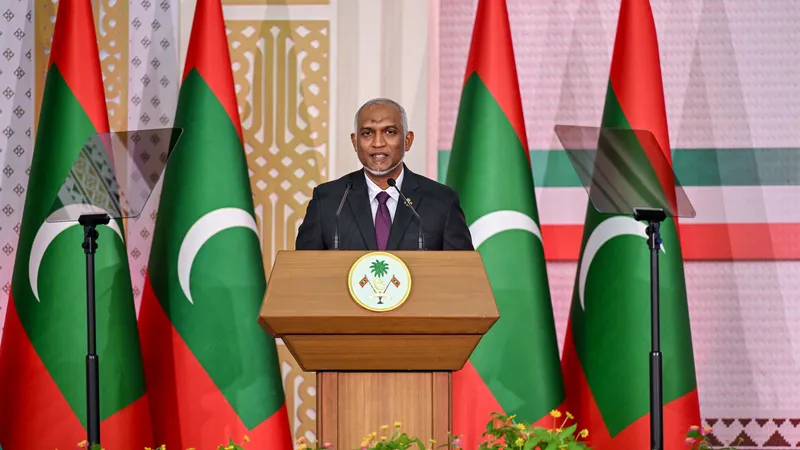
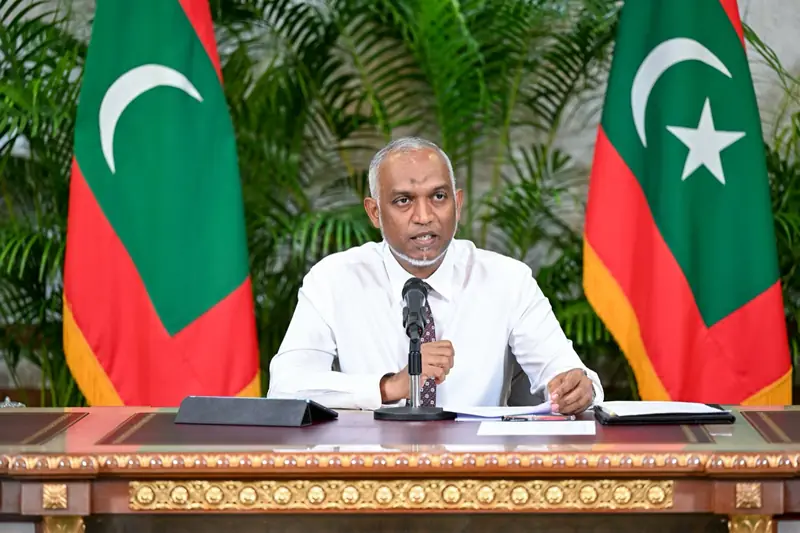
President Dr Mohamed Muizzu welcomed the judgment the same day. In a statement carried by the President's Office, he called it an important development in global efforts to uphold the Genocide Convention. He also noted the Maldives' place among the States that intervened in the proceedings.
What the Court decided
The case was brought by The Gambia, which filed it on 11 November 2019 under the 1948 Genocide Convention. Public hearings on the merits opened in The Hague on 12 January 2026. President Yuji Iwasawa read the judgment, which is final, binding on the parties and without appeal.
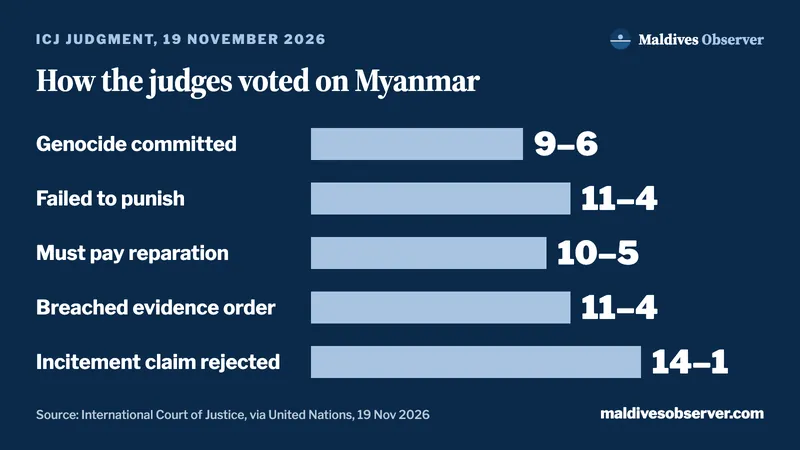
The Court did not uphold every claim. It found unanimously against The Gambia's remaining submissions, and by 14 votes to one it held that Myanmar had not directly and publicly incited genocide by private persons. The main findings and their votes were:
| Finding or order | Vote |
|---|---|
| Myanmar committed genocide against the Rohingya | 9–6 |
| Myanmar failed to prevent genocide | 9–6 |
| Myanmar breached its duty to punish genocide | 11–4 |
| Myanmar failed to pass the laws the Convention requires | 14–1 |
| Myanmar must investigate and, where warranted, prosecute suspects | 13–2 |
| Myanmar must make restitution and pay compensation | 10–5 |
| Myanmar breached the 2020 order to preserve evidence | 11–4 |
| Myanmar directly and publicly incited genocide | Rejected, 14–1 |
Source: International Court of Justice, judgment of 19 November 2026, as recorded by the United Nations.
Six judges voted against the central genocide finding: Vice-President Julia Sebutinde, Judges Peter Tomka, Ronny Abraham, Xue Hanqin and Georg Nolte, and Judge ad hoc Claus Kress.
The scale of the 2017 operations
According to the United Nations, the clearance operations drove some 700,000 Rohingya out of northern Rakhine and into Bangladesh. Nearly 400 villages were partly or wholly destroyed, about 40% of the almost 1,000 villages in three townships. The UN said the Court put the number of Rohingya killed at about 10,000.
The Court found that Myanmar's security forces and other State organs killed members of the group, caused them serious bodily or mental harm, and imposed measures intended to prevent births. The UN describes the ruling as the first of its kind against a State. In earlier cases the Court found Serbia responsible only for failing to prevent and punish the 1995 Srebrenica genocide (2007), and it dismissed the claims between Croatia and Serbia (2015).
Why the Maldives intervened
The Maldives filed a declaration of intervention on 15 November 2023, under Article 63 of the Court's Statute. On the same day Canada, Denmark, France, Germany, the Netherlands and the United Kingdom filed a joint declaration. Article 63 lets any State that is party to a convention join a case on how that convention should be read. The Court's interpretation then binds the intervening State as well.
In its declaration the Maldives cited its deep concern over the continued human rights violations against the Rohingya Muslims. It also stressed the need for international co-operation to prevent and punish genocide. Myanmar objected, but in an order of 3 July 2024 the Court admitted the Maldives' declaration in so far as it concerns the construction of the Convention. The Maldives filed its written observations on 28 February 2025.
Slovenia, the Democratic Republic of the Congo, Belgium and Ireland later filed declarations of their own, which the Court dealt with in an order of 25 July 2025. That brought the number of intervening States to 11. The Maldives has also filed a declaration of intervention, dated 1 October 2024, in South Africa's genocide case against Israel.
What the judgment means for the Maldives
An intervening State is not a party to the dispute, so the reparation orders apply to Myanmar alone. But the Court's reading of the Convention now binds the Maldives too. That includes its findings on the duty to punish, which Myanmar was held to have breached by 11 votes to four, and on the duty to pass laws that give the Convention full effect.
President Muizzu said the ruling shows the role of the Court in upholding international legal obligations and in pursuing accountability through peaceful and judicial means. He called on all States to strengthen co-operation to prevent genocide and to ensure justice for victims. For the government's wider record, see our review of the government's three years in office.
What happens next
Myanmar must pass laws giving full effect to the Convention, investigate and, where warranted, prosecute those suspected of the 2017 crimes, and give guarantees that the acts will not be repeated. Restitution includes the safe, voluntary and dignified return of displaced Rohingya and the reunion of separated families. Myanmar must report to the Court on restitution and compensation within two years of the judgment. The Court will then fix the amount and form of compensation in a later phase.
Explainers
- Who is the President of the Maldives? Muizzu, the Vice President and the cabinet
- Maldives vape ban and tobacco rules: what is banned and what visitors can bring
- Velana International Airport in numbers: passengers, the new terminal and transfers