60 mm in a day at R. Ifuru as late-monsoon rain follows three weeks of island flooding
R. Ifuru recorded 60.6 mm of rain in the 24 hours to 08:00 on 16 November, after three weeks in which the NDMA reported flooded homes from Malé to HDh. Kulhudhuffushi and GA. Kolamaafushi. The Met Service expects above-normal November rain in the centre and north.
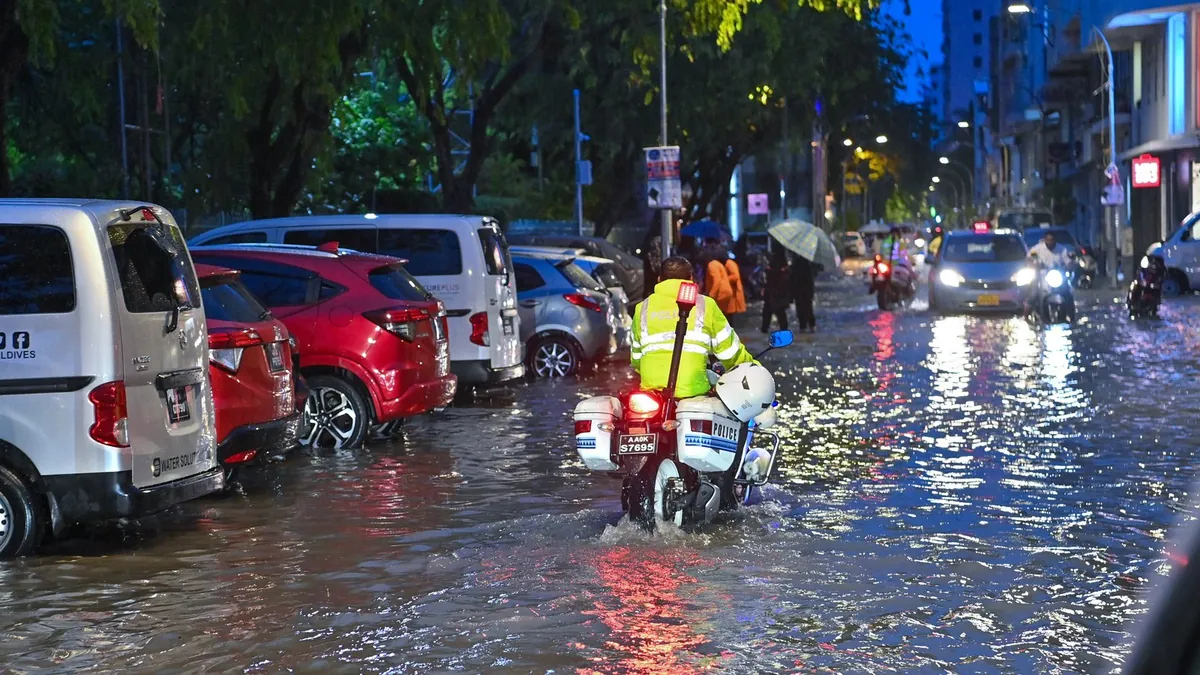
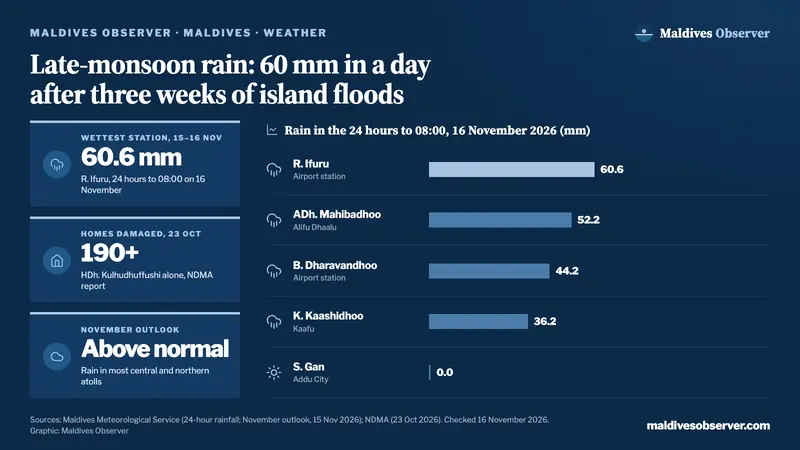
Rain fell across the central Maldives on Sunday 15 November 2026. R. Ifuru recorded 60.6 mm in the 24 hours to 08:00 on Monday, the highest of the 27 stations reporting to the Maldives Meteorological Service. The rain followed three weeks in which the National Disaster Management Authority (NDMA) reported flooded homes in Malé, the northern atolls and Gaafu Alifu Atoll. The Service expects November rain to stay above normal in the centre and north.
The weekend rain did not fall evenly. ADh. Mahibadhoo logged 52.2 mm, while ADh. Maamigili, in the same atoll, logged 1.2 mm. Five stations recorded no rain at all, among them Gn. Fuvahmulah, S. Hithadhoo and S. Gan in the far south. That patchiness is typical of the showers and thunderstorms that cause island flooding here. A single cell can put several centimetres of water on one island and miss its neighbour.
Where the rain fell
| Station | Rain, 08:00 on 15 Nov to 08:00 on 16 Nov 2026 |
|---|---|
| R. Ifuru (airport) | 60.6 mm |
| ADh. Mahibadhoo | 52.2 mm |
| B. Dharavandhoo (airport) | 44.2 mm |
| K. Kaashidhoo | 36.2 mm |
| B. Goidhoo | 32.2 mm |
| Lh. Olhuvelifushi | 12.9 mm |
| AA. Thoddoo | 12.3 mm |
| Sh. Funadhoo, V. Rakeedhoo, Gn. Fuvahmulah, S. Hithadhoo, S. Gan | 0.0 mm |
Source: Maldives Meteorological Service, 24-hour accumulated rainfall, read on 16 November 2026.
For scale, the Service's long-term average for the whole of November at Hulhulé is 237.5 mm. One day at Ifuru brought about a quarter of that monthly figure.
Three weeks of flooded homes
The NDMA's own reports show the same pattern repeating since late October. Each time a short, heavy downpour has overwhelmed drainage on a low island, and councils, police and the MNDF have dug trenches, pumped water out and filled sandbags.
- 21 October, Malé. Pumps were deployed at 10 places in the capital and 10,000 sandbags were handed to the Malé City Council. By 23:00, sandbag requests had come from 33 homes, 35 shops, four schools and two clinics.
- 23 October, northern atolls. HDh. Kulhudhuffushi reported more than 190 damaged homes and HDh. Nolhivaranfaru more than 60. On a third island in the atoll, the council said about 95 per cent of homes had taken in water. Lh. Naifaru reported two damaged homes.
- 6 and 7 November, GA. Kolamaafushi. Water entered homes and institutions, and parts of the island lost power. An MNDF Southern Area Command team arrived that night with dewatering pumps. In one home, overflowing toilets left sewage in the house.
- 7 November, Sh. Lhaimagu. A tornado tore roofs off about four houses and several warehouses and injured one person.
- 8 November, HDh. Nolhivaram. Two and a half hours of torrential rain put water into three homes. The council dug trenches on four sides of the island to carry it to the sea.
The NDMA's hazard guidance says floods from heavy rain are common across the islands, mostly during the southwest monsoon, known locally as Hulhangu. It says the worst damage tends to be in the central and southern atolls, which get more rain.
A late monsoon, not a new one
This is still the end of the southwest monsoon season, which the Service dates from mid-May to November. The northeast monsoon has not arrived. The Service's forecast issued on 16 November gives southwest to westerly winds of 8 to 18 mph at Hulhulé, Kadhdhoo, Kaadedhdhoo and Gan. Its traditional calendar puts the country in Nora Nakaiy, from 14 to 26 November. It describes that period as "light winds with sun showers as the monsoon transition approaches".
On 15 November the Service published its outlook for the month. For most central and northern atolls it expects more rain than usual this month. For the south it expects normal or higher totals. It also expects maximum and minimum temperatures to be above normal across the country.
Who to call
The NDMA lists these emergency numbers:
- NDMA: 115, or 333 3456
- Police: 119
- MNDF Fire and Rescue: 118
- Ambulance: 100
- Coast Guard: 191
- Maldivian Red Crescent: 1425
Island disaster plans set out who does what when water rises. The NDMA says it has helped 72 islands draw up such plans. The most recent was K. Guraidhoo, where work began on 9 August 2026 and included training a community emergency response team.
Live Met Service forecasts and alerts are on our Maldives weather page.
What happens next
The Service's 24-hour forecast from 10:00 on 16 November is mostly fine for Hulhulé and HDh. Hanimaadhoo, apart from a few showers. It gives isolated showers and a few thunderstorms for the southern stations. Seas are moderate in most areas, with waves of 3 to 6 feet, and no advisory was in force. The Service's model shows more rain in the north later in the week. Its point forecast for HDh. Kulhudhuffushi, one of the islands flooded in October, gives about 65 mm on Tuesday 17 November and 16 mm on Wednesday. Model figures for a single island can change from run to run, so readers in the north should watch for Met alerts. Nora Nakaiy runs until 26 November. The Service's own outlook means the wet spell may not be over before the monsoon turns.
Related data
All data trackersExplainers
- Maldives weather by month: rainfall, temperature, monsoons and sea conditions
- Is the Maldives sinking? Sea level and climate in numbers
- Maldives public ferry and bus guide: RTL routes, fares and how to book