Whale shark and manta ray season in the Maldives: where to go, when, and the rules
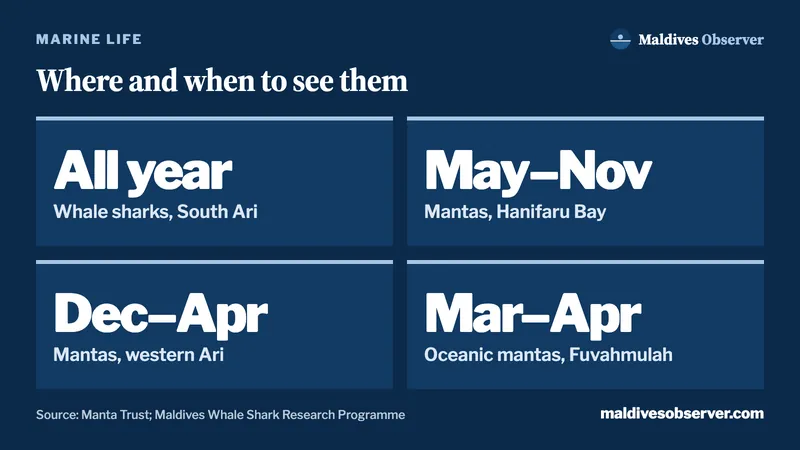
Whale sharks are at South Ari all year and manta rays fill Hanifaru Bay from May to November. Here is the month-by-month calendar, the distance and boat rules, and the propeller guard rule that starts on 31 December 2026.
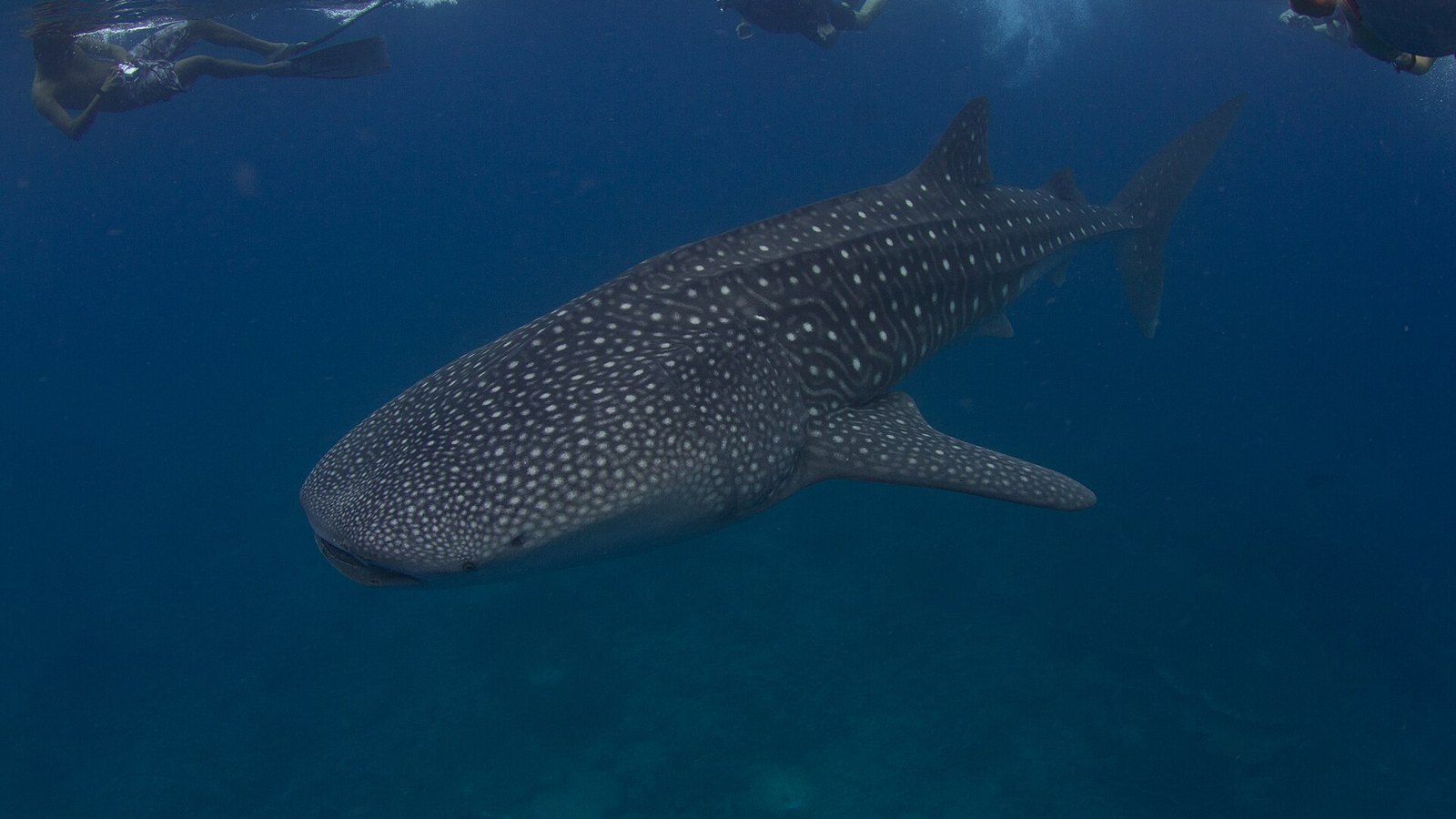
Whale sharks can be seen in the Maldives all year at the South Ari Marine Protected Area, and manta rays gather in Hanifaru Bay in Baa Atoll from May to November. In 2024 the manta season in the bay peaked in August, when researchers identified 165 mantas there in a single day. Both sites are protected, and both have fixed rules on how close a swimmer or a boat may come.
The rules at South Ari tighten again at the end of this year. From 31 December 2026, only boats with propeller guards or jet engines may take snorkellers and divers into the protected area, under the management plan published by the Ministry of Climate Change, Environment and Energy. This guide sets out where and when to see each species, and the rules that apply, using figures from the ministry, the Manta Trust, the Maldives Whale Shark Research Programme and published research.
Where and when: the calendar
| Site | Species | Best months |
|---|---|---|
| South Ari Marine Protected Area (Rangali to Dhigurah) | Whale shark | All year |
| Hanifaru Bay, Baa Atoll | Reef manta | May to November; August peak in 2024 |
| Hanifaru Bay and eastern Baa Atoll | Whale shark | May to November; July and August peak in 2024 |
| Dhigurah side of South Ari (east) | Reef manta | Southwest monsoon, from May |
| Rangali Madivaru and western Ari sites | Reef manta | December to April |
| Rasdhoo Atoll | Reef manta | Northeast monsoon, December to March |
| Fuvahmulah | Oceanic manta | March and April |
Sources: Manta Trust annual reports for 2024; Maldives Whale Shark Research Programme; IUCN Important Shark and Ray Area factsheet for Southern Ari Atoll.
Why the monsoon decides it
The Maldives has two monsoons. The southwest monsoon runs from about May to October or November, and the northeast monsoon from about December to March. Manta rays feed on plankton, and the wind decides where the plankton collects.
During the southwest monsoon, currents push across the atolls from the southwest. The atolls rise about 2,000 metres from the sea floor, which forces deep water up, and plankton is trapped on the eastern sides and in Hanifaru Bay. When the wind turns in December, the mantas move to the western sides. A 2020 study of sightings at 273 sites found that the southwest monsoon winds and plankton levels were the main drivers of where reef mantas go.
Whale sharks at South Ari behave differently. The Maldives Whale Shark Research Programme says two studies found no seasonal change in the number of sharks there. The sharks do shift between the eastern and western sides of the atoll with the monsoon. Our month-by-month guide to the best time to visit the Maldives has the rainfall and sunshine figures for each season.
How many are there?
- Reef mantas: 6,096 individuals had been identified in the Maldives by the end of 2024, from more than 80,000 photo sightings since 2005, the Manta Trust says.
- Oceanic mantas: 1,014 individuals were on record by October 2024.
- Hanifaru Bay: 526 individual mantas were recorded there in 2024. Every sighting fell between May and November, and the bay accounted for 74% of all manta sightings in Baa Atoll.
- Whale sharks: 399 individuals were identified at Southern Ari Atoll between 2002 and 2023, and 91% of them were male. They measured between 3.2 and 8 metres.
The whale shark is listed as endangered and the reef manta as vulnerable on the IUCN Red List. All sharks are protected under the Fisheries Act of 2019, and all rays have been on the national protected species list since 2014.
Rules for swimming with whale sharks
The national whale shark guidelines apply everywhere in the Maldives:
- Stay at least 3 metres from the head and body, and 4 metres from the tail.
- Do not touch, ride, feed or block the path of the shark. Approach slowly from the side.
- No flash photography and no lights near its head.
- No motorised swimming aids, and no selfie sticks near the animal.
The South Ari Marine Protected Area adds its own rules, set out in the management plan dated 6 September 2026:
| Rule | Limit |
|---|---|
| Boat speed inside the protected area | Under 10 knots |
| Boat speed within 250 metres of a whale shark | Under 5 knots |
| Boat speed within 50 metres | Under 2 knots |
| Boat distance from a whale shark | At least 15 metres |
| Boats around one animal | Six, including the ranger boat |
| People in the water around one animal | 60 |
| Time in the water | 15 minutes each if others are waiting |
| Hours | 6 am to 6 pm |
| Guides | One certified guide for every six guests |
Source: South Ari Marine Protected Area management plan, Ministry of Climate Change, Environment and Energy. The ministry says no entry fee is charged at present.
Why propeller guards are coming
Many South Ari whale sharks carry injuries. A study published in Scientific Reports in 2021 found that 61 of 100 whale sharks tracked in the protected area between 2014 and 2019 carried major injuries. An earlier study counted 409 injuries on 107 sharks and found that only about 1% came from ropes, nets or hooks.
The ministry's answer is the propeller guard rule. Vessels must fit guards by 31 December 2026, and after that date only boats with guards or jet engines may run snorkelling or diving trips in the area. Visitors booking a whale shark trip for 2027 can ask the operator whether its boat complies.
Rules at Hanifaru Bay
Hanifaru Bay is a core zone of the Baa Atoll UNESCO Biosphere Reserve, declared in June 2011. Its code of conduct, in the conservation plan for 2025 to 2030, is stricter than at most sites:
- Snorkelling only. Scuba diving is not allowed.
- No more than 80 snorkellers in the bay at one time, and no more than 45 minutes in the water.
- An access permit and a certified guide are required. One guide may take 10 guests in calm water and five in rough water.
- Keep 3 metres from a manta. Approach from the side, do not chase or touch, and keep fins below the surface.
- No flash photography, no drones and no fishing.
- The bay is closed from 6 pm to 6 am, on Fridays from noon to 2 pm, on the Hajj days and on the first day of Ramadan.
Rangers are stationed at the bay. A yellow flag means it is full, and a red flag means strong currents.
Frequently asked questions
When is whale shark season in the Maldives?
South Ari has whale sharks all year. In Baa Atoll they arrive with the southwest monsoon, with most sightings in July and August in 2024.
What is the best time to see manta rays in the Maldives?
May to November on the eastern sides of the atolls, including Hanifaru Bay, and December to March on the western sides.
When is Hanifaru Bay season?
May to November. In 2024 every recorded manta sighting in the bay fell in those months, and August was the peak.
Can you dive in Hanifaru Bay?
No. It is snorkel only, with a limit of 80 snorkellers and 45 minutes in the water.
How close can you get to a whale shark?
No closer than 3 metres from the head or body and 4 metres from the tail. Touching is not allowed.
For transfers, entry rules and local customs, see the Maldives travel guide for 2026–27.